

The Patriot
Skip To:
My Viewing Experiences of watching this film as a child, a young adult, and now an adult, and how my understanding has changed over time.
Who’s Who, basically which real life historical figures are the film’s characters based on.
The Good - Cinematography, Score, and General Historical Accuracy/Vibes.
The Bad - Conflict Simplicity, Depiction of Slavery and Minorities, and Early 2000’s Hollywood “Wokeism”.
Some Fixes - Civil War, Slavery / Racism, Grey Characters, and Nuanced Accuracy.
For the Content Machine, some other historical figures to do biopics on, or at the very least base some historical fiction on.
There will obviously be spoilers about this film throughout.
Listen to the movie soundtrack suite:
My Viewing Experience
The Patriot came out in June, 2000, presumably as a summer blockbuster before Independence Day celebrations. It is surprisingly the only big budget cinematic take on the Revolutionary War that I can really find.
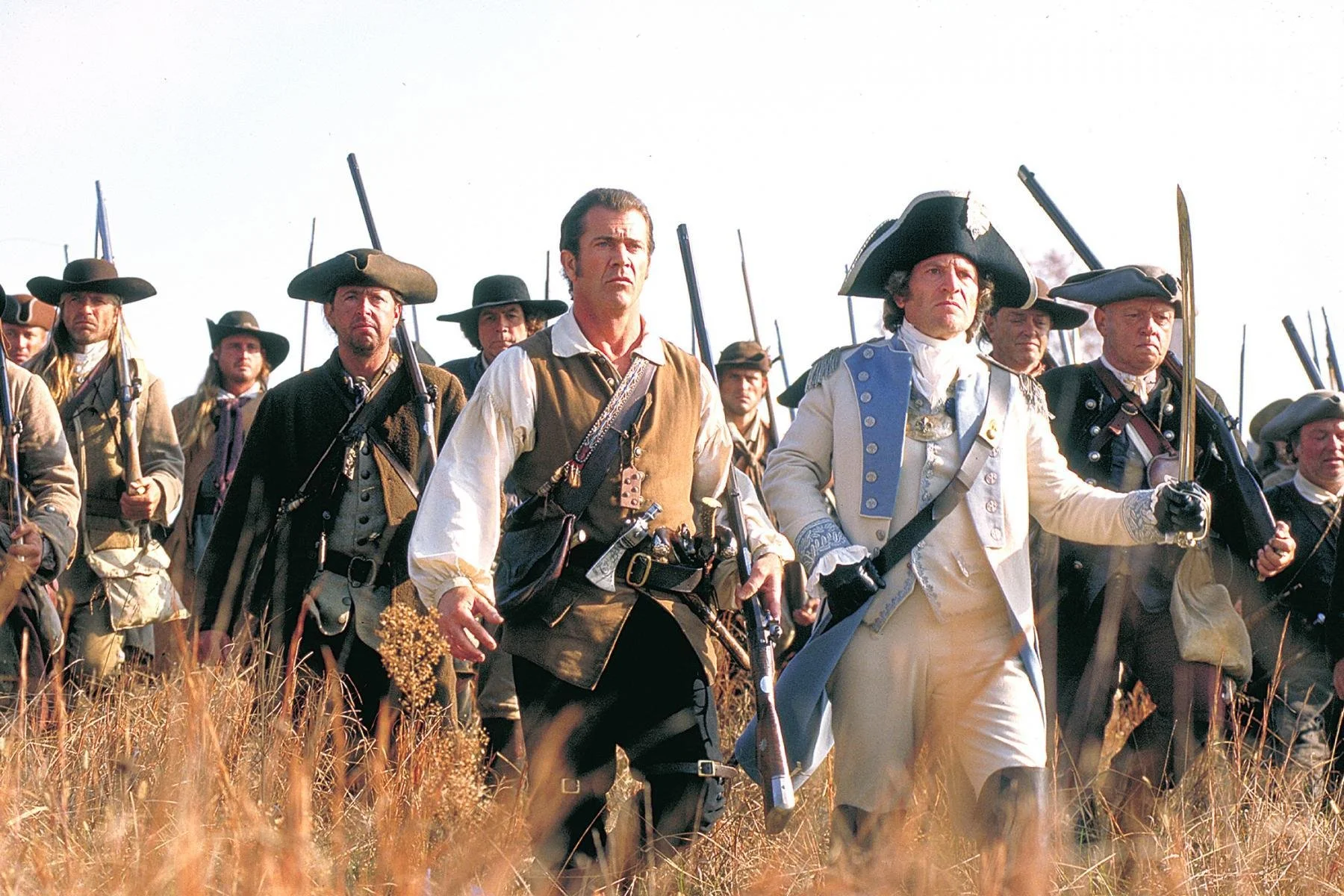
I probably watched it within that first year, being around 9-10 years old. Being a typical boy, I leaned into history and war and found myself enthralled with the film. So much went over my head. There were good guys in blue, and bad guys in red. The battle cinematography was brilliant, matched only by the epic score. This was an era of my life filled with road trips to Revolutionary and Civil War battlegrounds. I would collect blue soldiers from gift shops at both indiscriminately, though I always found the hats better in the former. I remember feeling patriotic, and playing with sticks with my friends, lined up like soldiers. I remember bragging to my friends that I was the better shot, even though I had never held a gun in my life. It was an easy movie to like. It quickly became one of my favorite movies, along with other patriotic war epics of the era, like Saving Private Ryan, Black Hawk Down, and Pearl Harbor. I probably watched it a half dozen more times, definitely whenever it came up on tv through my teens.
But I recall turning on it in college. At some point, I learned a bit more about history, perspective, critical thinking, and, for lack of a better term, wokeism. Learning about the great man theory took some of the luster off of viewing the world this way. The overly violent and one dimensional portrayal of the film began to not age well. The romantic plot of the main character, which as a boy I didn’t even register, was now too weird. Mel Gibson it turned out to not be such a great hero. A drunken anti-semitic tirade, racial slurs, and a domestic violence charge really had me devalue the entire film, and chalk it up to a case of excessive patriotic propaganda. Add to that Gibson’s pretty heavy Christian proselytizing message with his direction of The Passion of the Christ and Hacksaw Ridge, and that was the nail in the coffin. I left similar action films of that era alone; Braveheart, Kingdom of Heaven, The Mummy, and Independence Day and let The Patriot take the fall in exchange for my maturity.
Now it’s been over a decade at least since I’ve last seen it. And I’ll set the current mindset. I’m generally low with patriotism these days, but on the heels of finishing Ken Burns’ The American Revolution on PBS, I was feeling particularly proud and eager to revisit the film. Also, I’ve been spending a lot of time in South Carolina, where the film was set (something I never realized as a kid, as the Revolutionary War was a New England conflict that the South begrudgingly joined, I honestly probably set the film in my head in Pennsylvania or at most Virginia). I even stumbled upon a South Carolina historical society activation at a Gamecocks tailgate and found their claims wildly bold, though later more justified after watching the documentary.
Now with that context, I threw it on with my brother and found that it held up better than I had recalled. And in a third era of perspective, I now enjoy the film again. I’ll dive into it more in the Pros and Cons section. I did enjoy watching Kirk Fox (Sewage Joe from Parks and Rec / Blade from Community) make a brief appearance as a South Carolinian militiaman. It was also noted that Martin starts the film with seven children, goes down to five, and ends with six. Heath Ledger is also always a gem, elevating everything he is in. The R rating is tough, as to some extent I would want boys to watch this as a gateway to history education. I’m sure there is a tv cut where the more gratuitous violence is cut, sorry cannonballs and field hospital. And the previous criticism of singular great men who somehow change the course of history has some more legs since it turns out George Washington himself was a lucky loon who more than once would personally rally the troops to hold the line.
One of the most famous accounts comes from the Battle of Princeton (January 3, 1777). Washington’s aide-de-camp, Colonel John Fitzgerald, was so certain the General was about to be killed that he actually covered his eyes with his hat so he wouldn't have to watch him die. Washington had ridden within 30 yards of the British line, well within musket range, to rally his fleeing militia. After the smoke cleared and Washington was revealed to be unharmed, Fitzgerald rode up to him, weeping with relief. "Thank God! Your excellency is safe," Fitzgerald cried out. Washington, calm as ever, replied: "The day is our own. Help me and bring up the troops."
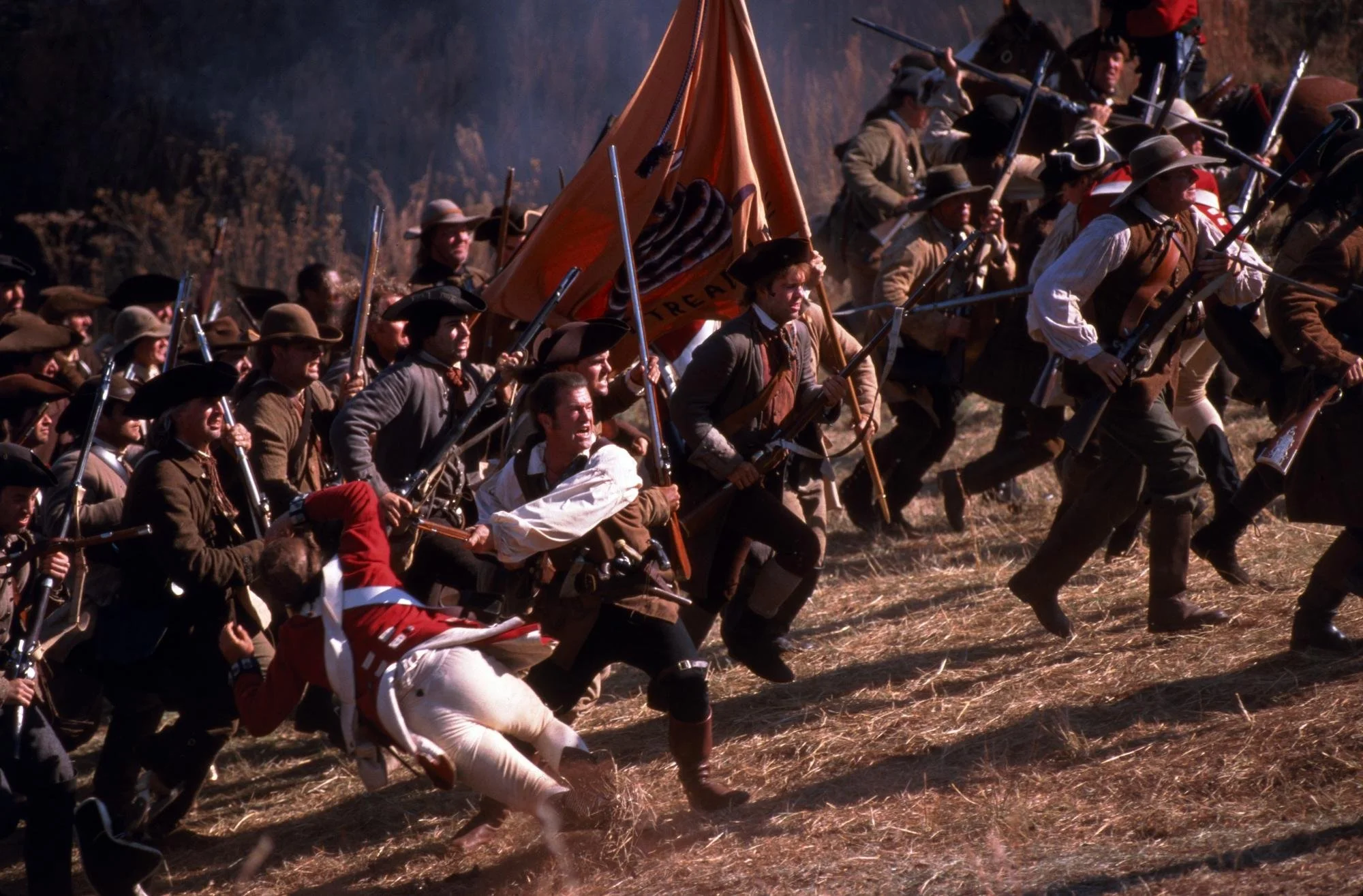
Wow, what a legend. And it seemed battle tactics in that era were often about maintaining discipline, intimidating the opposition, and forcing them into a mob mentality to retreat to take the field. So, it isn’t entirely unreasonable that the somewhat excessive flag carry and slow motion rally scene that Colonel Martin does where literally hundreds of soldiers turn 180 degrees to rejoin the fray has some real merit.
Who’s Who
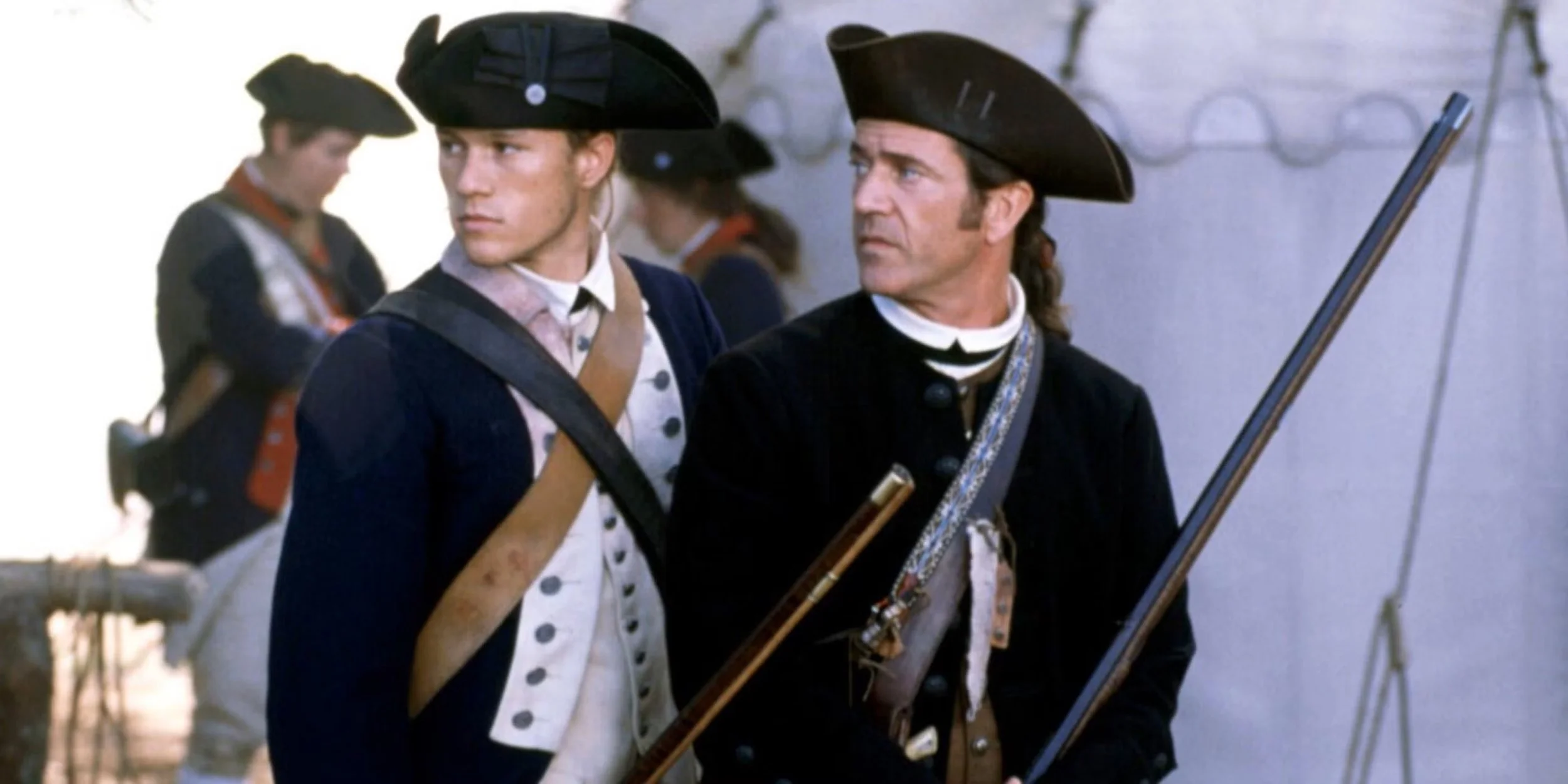
It’s strange that basically no one in the film is real except for two generals, Charles Cornwallis and Nathaniel Greene. I understand the creative license that the era’s big budget Hollywood films needed to abide by, and the desire to not delve too deep into his dark sides and make the fictional character a near “perfect” hero from the modern lens. They can artificially add greater emotional stakes with the off screen death of his wife and deaths of his two sons, but I feel the longevity and respect of the movie suffers without a more realistic level of nuance.
Benjamin Martin played by Mel Gibson is a composite of mainly two militia leaders:
Francis Marion (The "Swamp Fox"): He is definitely the primary inspiration. The film was originally a biopic about Marion. He was a South Carolina militia leader who revolutionized guerrilla warfare by launching surprise hitches against British supply lines from the impenetrable coastal swamps. His elusive tactics and "hit-and-run" style earned him his famous nickname and kept the Patriot cause alive in the South after several major American defeats.
They avoided the biopic for two main reasons, he was a brutal slave owner, and he conducted ongoing overly violent campaigns against the Native Americans (particularly the Cherokee). Hollywood (or at least these producers / studio) at the time wanted sanitized broadly appealing heroes.
Daniel Morgan: A New Jerseyan / Virginian brilliant tactical commander known for leading his elite "Morgan's Riflemen" and delivering a crushing blow to the British at the Battle of Cowpens. His innovative use of militia in a "double envelopment" maneuver (having militia retreat as a tactic) is considered a masterpiece of military strategy and served as the direct inspiration for the final battle in The Patriot.
Other aspects of the character / plot were taken from the following two:
Thomas Sumter: A militia leader who joined the fight after the British burned his home. This South Carolinian was nicknamed the Fighting Gamecock. So the University of South Carolina Gamecocks actually get their team name from him.
Andrew Pickens: A militia leader who also joined the fight after his estate was torched and he lost a son in the war.
Colonel William Tavington played by Jason Isaac is a composite of mainly two British leaders:
Banastre Tarleton: The commander of the British Legion cavalry (green clad loyalists), Tarleton was infamous for his speed, aggression, and a perceived lack of mercy that earned him the moniker "Bloody Ban." While highly effective on the battlefield, his controversial actions at the Battle of Waxhaws (he allegedly gave no quarter after the battle, since he had given them an earlier ultimatum, and killed Americans who had eventually surrendered) became a powerful propaganda tool for the Americans to recruit more soldiers to their cause. But let’s be clear, he was not a child-killer or church-burner as is his fictional character is depicted. Though chronicler, Horace Walpole, wrote that Tarleton boasted about killing more men and laying with more women than anyone in the British army…
A main reason why they did not use Tarleton was that they needed, for classic American simplistic cinema, to have their hero kill the villain on screen. The real Tarleton survived and returned to England.
Christian Huck: He was an ardent loyalist, who viewed all rebels as traitors. He was aggressively forward, saying “even if the rebels were as thick as the trees, and Jesus Christ would come down and lead them” that he would still defeat them. This irked southern Presbyterians a lot, and his actions of burning homes, menacing women, and murdering rebels. He took families hostage and was eventually killed by a militia in retaliation. His actions also caused many men to take up arms against the crown. But, again, let’s be clear, there are no reports that he was a child-killer or church-burner.
Colonel Harry Burwell played by Chris Cooper is very loosely:
Henry "Light Horse Harry" Lee: A daring cavalry officer and favorite of George Washington, Lee earned his nickname for leading "Lee’s Legion" in lightning-fast raids and critical scouting missions throughout the Southern theater. The film correctly portrays him as a high-ranking, professional officer of the Continental Army who acts as a bridge between the ragtag militia and George Washington’s formal command. However, the implied old friendship and shared trauma from the French and Indian War between Burwell and Martin is fictional. In reality, Henry Lee was much younger and did not have the history with men like Francis Marion that the film suggests. But this background allows the film to give us an immediate context that our protagonist is a highly respected soldier, and some buddy buddy behavior about how to parent and protect Gabriel (whom he says he’ll transfer to being a quartermaster or clerk, but that must not have happened since he was on the front lines for some battles in the montage…)
Also random facts about him, he later becomes governor of Virginia and is the father of General Robert E. Lee.
Major Jean Villeneuve played by Tchéky Karyo is not based on anyone in particular, just an aggregation of French officers who joined the Americans. Loosely they seem to have used two of the most famous Europeans who joined the American side as some light inspiration, at least for a few scenes. At the end of the day, I actually would consider him an original character:
Marie-Joseph Paul Yves Roch Gilbert du Motier, Marquis de Lafayette: He was a young, idealistic (and very wealthy) French aristocrat who defied his king to fight for the American cause. Like Villeneuve, he became a trusted advisor to American leadership and was instrumental in securing French naval and ground support that ultimately won the war.
However, he was much younger than Jean Villeneuve (no tragic backstory of a dead wife and child) and they do a good job of adding in the historical friction between the French and the American colonists who had fought against each other just 20 years earlier in the French and Indian War. And obviously the animosity between the French and British rivalry as well.
Friedrich Wilhelm August Heinrich Ferdinand Freiherr von Steuben, Baron von Steuben: (wow these European names are lengthy) Though Prussian, von Steuben was able to speak French and also served in the French style and was the officer responsible for training the ragtag American militia into a professional fighting force. The scene of Villeneuve in the film drilling the militia and being the "professional soldier" who is often frustrated by the lack of discipline and formal training among the American volunteers, is classic von Steuben. Though he primarily is known for training them at Valley Forge (in that infamous winter), not in the South.
The Good
The Score
Not much to say here other than John Williams crushed it. I still whistle tunes from this film whenever I’m feeling patriotic.
Cinematography
What the slow motion action sequences does do particularly well is having comrades fall from bullets very near our main characters. It really adds a level of jeopardy and the chaos of war. How close they often are to falling is a level of sheer randomness. Given there aren’t many war films with single shot muskets, this is especially highlighted here.
The lighting on the battlefield, with the smoke, and the angles, and the epicness of the maneuvers are unparalleled for this era of combat. I think the only other movie that I enjoyed for this battle style is Napoleon. I recognize that Gods and Generals and Gettysburg both did this too, but I found their filming style significantly less cinematic. I haven’t seen Barry Lyndon yet, but it’s high on my list. Also, I’ve stumbled upon Sharpe starring Sean Bean and I’m very intrigued other than a runtime of 23+ hours for just the original series.
Direction
The pacing is pretty good, albeit director Roland Emmerich does overly use fade outs seemingly because there is a lack of ability to transition between some of the scenes. It is heavily reminiscent of the action films of its era, with its fast moving plot and . Also he has made some pretty garbage action movies, but I will call out Independence Day which rocked. And he’s a great LGBT rights activist and even fought for minorities to be cast, and have interracial couples depicted on screen. So good on him.
General Historical Accuracy
The movie gets most of the vibes and a lot of the details correct. It overly simplifies a lot, and is far more pro America than the reality of the situation that it was much more of a civil war at times. They deal with it a bit with Adam Baldwin’s Captain James Wilkins serving with Tavington, but they could have done more. There are whole battles fought in South Carolina that featured zero British soldiers, only American rebels v. American loyalists.
The Charles Town (after the war it would change its name to Charleston) debate regarding the levies to raise money for the Continental Army does a decent job of depicting that divide, though after that point, there’s basically only two American loyalists that ever show up again (Wilkins and the guy in the church, who is depicted more of a coward than a loyalist).
Timeline is a little messy, but I’ll give it a pass since it’s not a documentary.
Having Scottish and Irish soldiers, but proper English officers is a nice touch. And the English officers having classic gentlemanly European warfare decorum is a good move.
Having Occam forced into the service for his master is very accurate. Many slave owners and rich men would force or pay others to serve in their stead. At points large portions of the American army were made up of the poor.
This led me down a rabbit hole that I’ll sum up with a surprising stat, that the US military is actually pretty close to representing the population accurately socioeconomically. The poverty myth that more poor people are in the military isn’t currently true as education, fitness, and cognitive scores actually disqualify many, and the bottom 20% of households represent ~19% of enlistments. The top 20% is ~17%, but still, pretty close in the scheme of things.
However, Black Americans are overrepresented in the enlisted ranks, making up about 20% of the army’s enlisted force, compared to ~14% of the population.
The brutality of war is pretty accurately depicted. A few iconic cannonballs come barreling through, as well as a lot of blood and the harsh realities of field hospital surgery back then.
The use of guerilla tactics operating out of the swamps was Francis Marion’s (The Swamp Fox) acclaim to fame. In real life they would do even more camouflaging and would focus on supply wagons and messengers to disrupt the supply and communication lines for the British army.
The scene of Martin telling his militia to fire two shots and then run was a real thing Daniel Morgan did the night before the Battle at Cowpens. And the purposeful militia retreat to Continental regulars hidden over a ridge was a real tactic they did successfully.
Many of the uniforms were very accurate, as well as the different rifle and musket types…
The Bad
I watched Cinema Sins and didn’t agree with much of what they pointed out. Here are my cinema sins:
Historically inaccurate muskets and pistols.
I mean, these guys were all great shots. They never seemed to miss at all. Even the kids were perfect. I do recall saying growing up, aim small, miss small… when that came up again, I had flashbacks to camp. The American long rifle was significantly more accurate at long distance than the British Brown Bess, but it came with a significantly slower reload speed. And there is truth that American riflemen were targeting officers, like Cornwallis complains about, but the movie takes it another step with the pistols being crazy effective, especially at long distances, and our main characters never missing (except when it really matters so we can have close encounter boss battles for story).
Benjamin Martin is a perfectly crafted Hollywood hero and the villain is just comically evil with no redeeming qualities.
Liberal, Father, and Patriot. He is remarkably understanding to his children, giving pretty fair and reasonable advice to them. He is weirdly patient for a very violent man, with lots of temperance and desire to be a good father and family man. He is somehow so principled that he doesn’t resort to violence. It is only through his absurdly evil foil, the antagonist, Tavington who just murders his son in cold blood and a bunch of wounded soldiers after the battle, that he is forced to join the fray. Just as patriotic as Martin is, Tavington is selfish, and excessively murderous. Somehow it’s not the British who are the villains here, Cornwallis is pretty reasonable throughout, and other British officers are gentlemanly and courteous. Tavington is just so evil that the film descends into just a vengeance film, though we are forcefully dragged out of that as Mel Gibson waves American flags in slow motion instead of focusing on revenge.
Tavington’s mass murder of the townspeople of Pembroke in the church is just ridiculous.
There are lots of atrocities in war, but this never happened by any account. No village was locked in their church and burned down. To depict that is insulting to the real casualties of war. They could have easily killed Gabriel / Heath Ledger’s new wife in a more realistic manner for the plot, but really, did we need any more motivation than a few scenes earlier with John Billings (Leon Rippy’s character) dealing with his murdered wife and son, and then committing suicide? There was such emotion and impact with that. Why bury it with an over the top fictionalized Tavington massacre?
That said, I do like the line “this will be forgotten” as a wonderful justification of the means to an end. Many things are forgotten in war.
Why is there even an Aunt Charlotte romance plot?
The youngest child is somewhere between 2-3 years old… so it hasn’t been that long. I know he’s desperate for some help around the house, but that’s what he has the older kids for. Rich Aunt Charlotte and her very low cut dresses just feels so unnecessary for the film. She even calls him out on the fact that she is not her sister… and he stumbles through his denial… and at the end of the movie they have a new baby! Sure… I’m sure things like this happened back then, but is this a necessary addition to what becomes a pretty lengthy film?
His black freed workers are problematic.
This is Hollywood wokeism at its worst. Pretending that Martin wouldn’t have slaves, when his inspiration Francis Marion did, and most men of Martin’s station in South Carolina would. It’s a weird attempt of wokeism to appeal to the modern viewer by erasing real history. Heroes of that age weren’t perfect. And that’s alright. We shouldn’t rewrite history to sanitize it. I understand from a business perspective what they’re doing, but I would speculate that there are people who have watched The Patriot and thought, well slavery wasn’t so bad / some of them were free and loved their employers, especially our freedom loving founding fathers. George Washington had slaves, and he recaptured some that had defected to the British army after the war was over. And that’s alright, we can appreciate great men in their complexity and the net positive outcomes they made. Pretending that it didn’t happen is worse. Quick tangent, I feel this way about the black face ban as well, but I digress.
Martin having Occam sign his mark was a weird moment. The intent is clearly to make it seem that Martin doesn’t consider slavery “real”, but could be understood as just wanting his effective militia to have only fully willing members. Either way, this really did happen all the time, including richer men paying poorer men to fight in their stead.
Too much slow motion and long run time.
The second act drags and could have been shortened. And within the battles there’s often a lot of dramatic slow motion that begins to take a toll on me. But damn, do the hold the line and flag waving scenes really work… I may switch this to a pro. Because it’s all worth it for those facial expressions lighting up at the flag, and those turning retreating men rejoining the fray!
Some Fixes
Just removing much of the previous “bad” section is actually the fix, but here are a couple more ideas that would be good as well:
Amidst the anger of the incestual Aunt Charlotte romance angle, it occurred to me there was a very beloved female character in Martin’s home. Abigale, the maid, is very loved by the children and family. And regardless if she is free or a slave, would be a much more compelling story if Martin pursued her romantically instead of his wife’s sister. This reintroduces the complexity of racism at this time, while shedding more light on the many well documented relationships white property owners had with their slaves.
Tavington being more Huck (the loyalist American) and less Tarleton (British) would add a better angle on the civil war aspect of the American Revolution. They touch on it with Adam Baldwin’s Wilkins, but imagine if the main antagonists were all in the South Carolina statehouse room for the original vote, and the split vote truly creates a rift through every town in South Carolina. Having Martin have Wilkins and Tavington as sympathizers with his abstinence at rebelling at first as they are all exiled as the minority loyalists, then switching sides as he is dragged further into the conflict would provide much better emotional depth and context. And the aftermath of having one of these opponents perish on the field and the other suffer being on the losing side of a civil war would be far more dramatic.
At the very least, making Tavington more professional or at least principled than just a sadistic murderer would provide more complexity and motivation. The real Tavington, Tarleton, survived the war, and similarly I think that him leaving his home of South Carolina as he is no longer welcome there would be powerful. They had attempted to give him a little backstory as to why he is hungry to elevate his station through military service, but this is quickly forgotten about because he’s overly evil. There could have at least been better balance.
Obviously, the slavery subplot is the most criticized part, but imagine if Occam’s role wasn’t just to make that one racist guy proud to fight alongside him, but even helped our protagonist grow too? Let’s consider Martin a slaveowner again, and have his relationship with Occam help him understand that the cause of liberty for all (at least men) is bigger than what he originally thought. It’s probably too rosy for him to fully denounce slavery and give up his own slaves, but perhaps he can recognize they are all human as well, and respect at least Occam as an equal. Leave the door open to growth and move it from two side characters to two main characters. And end the movie with him granting him land, or helping him build his home to really demonstrate a new world could be built on American soil.
Stop Making Mindless Sequels, There Is Some Excellent Source Material in History
Clearly, even a heavily fictionalized, overly simplistic biopic of an amalgamation of Daniel Morgan and Francis Marion has legs, so why not make some other content with some of these men.
John Paul Jones
This is my top pick. Think The Patriot, but mixed with Master and Commander. A ragtag group of privateers going up against the best Navy in the world. They sail into British European waters, attacking supply ships, and selling what they can reap to keep enrich themselves and keep the venture going.
Nathaniel Greene
Marquis de Lafayette
Baron von Steuben
Benedict Arnold
Heck, I’ve always wanted to write a screenplay, maybe I’ll take one of these on.
In my next up list for this era, I do need to watch Jeff Daniel’s as George Washington in The Crossing. Turn: Washington’s Spies, April Morning, and Revolution are also on the shortlist. There’s also 1776 The Musical… I dunno, not a particularly exciting bunch of films to represent the era. I’m sure we’re overdue for more.